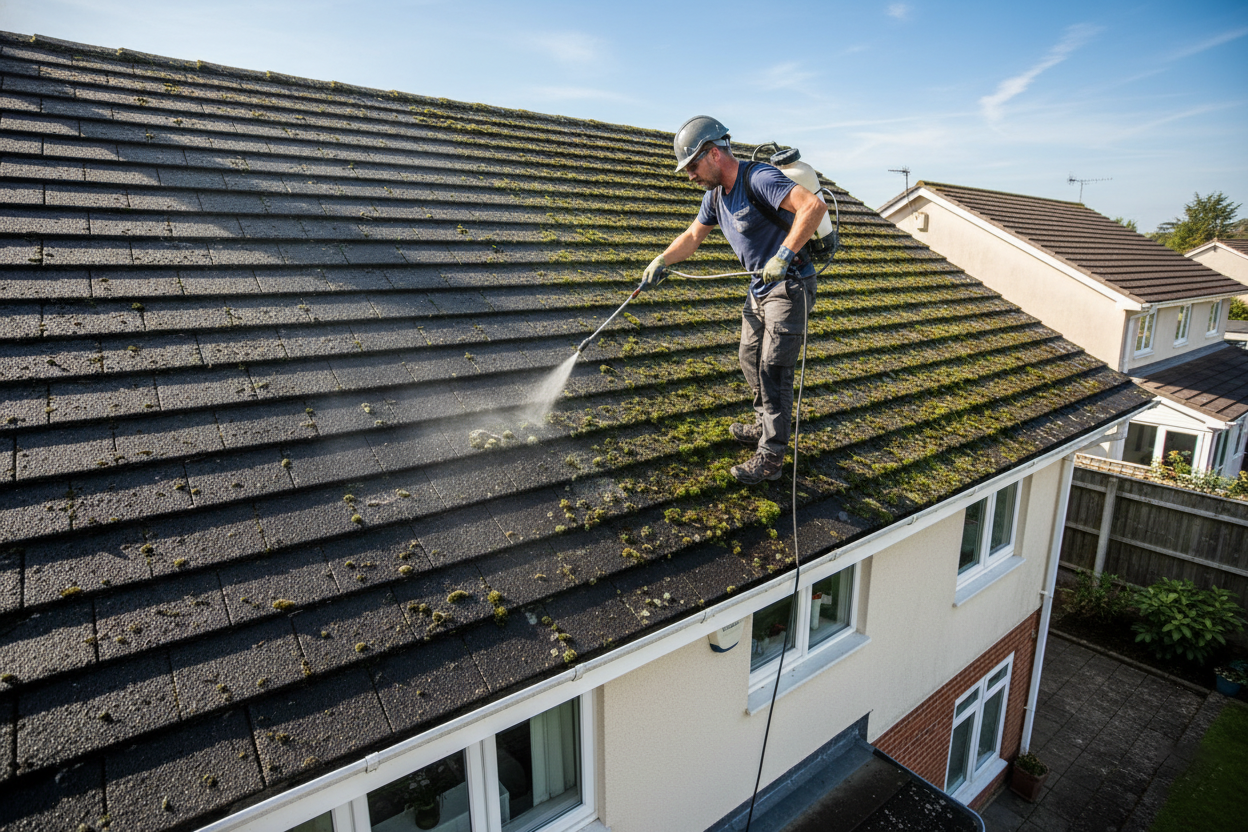
Yes, I know, a lot of us are busy pruning the garden or re-grouting the bathroom on Saturday and Sunday, but when are we ever going to look up? Never, unless there are some unsightly green clumps or dark streaks on our roofing! You may think, “Oh, she’ll be alright, it’s only a little bit of dirt.
But now for the facts. Those sneaky little invaders, moss, mould, and algae, can really cause problems if they are not dealt with immediately, as they will not only detract from the excellent curb appeal of your home, but they’ll also actively be degrading your roof. Let’s take a look at how good maintenance could actually prevent this costly scenario.
Meet the Gatecrashers
Whose gatecrashing your roof? First, there’s a troublesome airborne bacteria called Gloeocapsa magma, or blue-green algae if you prefer. When your tiles resemble somebody dribbling black paint horizontally across their surface, this is one of the numbers to blame.
It’s really fond of warm, moist conditions and downright feeds off the limestone filler used in most roofing products. And, last but not least, moss.
This tiny, fruitless plant loves to grow in the dark, wet cracks of your roof where it has easy access to rain through it leaves. And where there’s moss, mould will often appear alongside. Think of moss as a sponge- it creates the ideal self-contained pockets of holding water- a perfect place for mould to thrive.
Inside your home, mould spores sneak through gaps once they leave the roof. That shift matters because breathing changes for someone in your household might already be happening.
The Hidden Damage
It’s not just an ugly look. The lifecycle of these organisms is fiercely destructive.
Take algae. As it feasts on the limestone granules in shingles, it leaves permanent scars and eventually causes the materials to break down and detach completely.
However, moss is a root of a different kind when it comes to your roof structure. The way it causes rainwater to lie against your tiles means that it prevents the tiles from ever drying out.
Come a freezing winter’s night, the water begins to freeze, expand and push your roof tiles upwards, creating a crack, where water then descends. Suddenly, you want a pile of rotting wooden beams and massive amounts of dead and rotting insulation.
In addition to maintenance and repair costs, there is a hidden cost to your back pocket each summer. Those dark, unsightly algae stains on your roofing can’t reflect away those UV rays. Your house absorbs the sizzling Australian sun, and your air-con has to work harder, further increasing your power bills.
The Fix
So, how do we fight back? Calling in the pros for roof cleaning in Melbourne is an absolute game-changer.
But don’t just let anyone up there with a high-pressure hose. You need a process known as ‘soft washing’. Why? Because if you use high-pressure water on your tiles, you will rip out any protective coatings, force water back under the roof cavity and generally void your warranty altogether.
While soft washing utilises low-pressure water, it also involves the application of specific biocides. Its soft, gentle action kills moss and algae from the root level, meaning there are many years before they’ll start to grow back. Plus, the professionals up on the roof will identify some small problems, such as a cracked tile or loose flashing, before they become a major disaster!
Playing Defence
Here are five steps you can also take to keep your roof looking its best. Have trees overhanging your home? Trim those branches well.
It’ll reduce the amount of shade on the moss and prevent leaves from covering your tiles. Another best trick is to get some strips of zinc or copper along the ridge of the roof, go when it rains, these metals release ions which are carried away by water.
Those ions wash over the tiles and form a good barrier. And of course, the basics: regular gutter cleaning is important!
If leaves are clogging your gutters, rainwater will be running back onto the roof and providing the damp environment needed for these buggers. A biocidal preventative coating applied every few years is another honest way to prevent the green fuzz from returning.
Bottom Line:
At the end of the day, throwing a bit of cash at routine maintenance pays off big time. A good cleaning can actually stretch your roof’s lifespan by a solid 5 to 7 years.
Water might not wait until dinner to ruin your day. See green splotches? Notice grimy lines running down tiles? That signals trouble brewing overhead. Reach out to the best roof cleaners in Melbourne – book a checkup plus gentle clean right now, ahead of heavy rain rolling in.